Introduction: Where Eternity Meets the Present Moment
If you're planning to share your Varanasi memories on Instagram and want captions that truly capture the profound essence of this ancient city, you've arrived at the right place. But before we dive into captions, let me share why Varanasi demands more than generic travel phrases—it requires words that honor its spiritual depth, cultural richness, and timeless soul.
I'm Deepak, and my recent visit to Varanasi—also known as Kashi and Banaras—transformed my understanding of what a city can be. This isn't just another tourist destination you tick off a list. Varanasi is one of the world's oldest continuously inhabited cities, where civilization has flourished for over 3,000 years, where spirituality isn't practiced but breathed, where the sacred Ganga flows with stories of countless souls seeking liberation, and where every stone, every ghat, every temple holds layers of history that defy simple description.
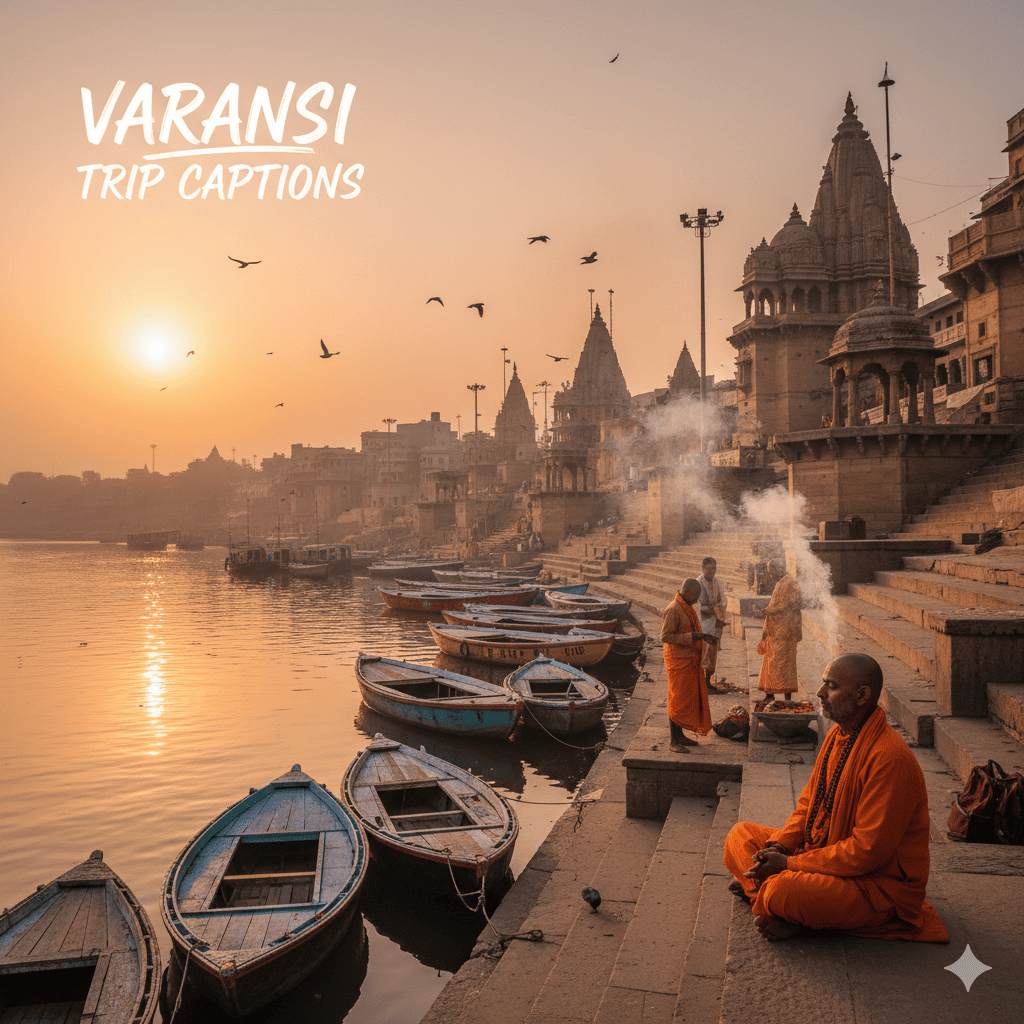
From witnessing the mesmerizing sunrise at Assi Ghat—where the first golden rays illuminate the river and create a symphony of light on water—to experiencing the powerful evening Ganga Aarti at Dashashwamedh Ghat where thousands of diyas (oil lamps) float on the river creating a galaxy on water, from the spiritual magnetism of Kashi Vishwanath Temple where devotees have worshipped Lord Shiva for millennia, to the labyrinthine narrow lanes filled with the irresistible aroma of street food that has fed pilgrims for centuries—Banaras left me speechless, humbled, and forever changed.
In this comprehensive guide, I'm sharing over 350 Varanasi trip quotes and Instagram captions, written with care, authentic experience, deep cultural understanding, and reverence for this sacred city. These aren't just generic travel captions—they're carefully crafted to reflect the spiritual depth, cultural complexity, and timeless beauty that make Varanasi unlike anywhere else on Earth.
But this guide goes beyond captions. You'll also discover:
• The profound history and spiritual significance of Varanasi
• Cultural insights to help you travel respectfully
• Photography tips for capturing the city's essence
• Detailed explanations of rituals and traditions
• Practical information for experiencing Varanasi authentically
• The deeper meaning behind what you're witnessing
Whether you're sharing photos of the ghats at sunrise, the Ganga Aarti ceremony, the ancient temples, the vibrant street life, the spiritual atmosphere, or the unforgettable food—these captions will help your Instagram posts feel deeper, more authentic, and more meaningful.
Understanding Varanasi: The City of Light, Liberation, and Life
The Spiritual Significance
Before we explore captions, understanding Varanasi's profound spiritual importance will help you create more meaningful content and travel more respectfully.
Kashi—The City of Light:
Varanasi is called Kashi, which literally means "the luminous one" or "city of light." According to Hindu belief, this light isn't physical—it's the spiritual illumination that comes from knowledge, devotion, and proximity to the divine. Kashi is believed to be the favorite city of Lord Shiva, and Hindu philosophy holds that dying in Kashi grants moksha (liberation from the cycle of birth and death).
The Sacred Ganga:
The Ganges River isn't just water in Varanasi—it's considered a goddess (Ganga Mata), a purifier of sins, a giver of salvation. Millions believe that bathing in the Ganga cleanses spiritual impurities accumulated across lifetimes. This isn't superstition to mock—it's faith that has sustained civilizations, brought comfort to countless souls, and created one of the world's most profound spiritual traditions.
The Ghats—Threshold Between Worlds:
Varanasi has approximately 88 ghats (riverfront steps), each with its own history, significance, and energy. These aren't just staircases—they're sacred thresholds where the earthly realm meets the divine, where life and death coexist without contradiction, where rituals older than most civilizations continue daily.
The Historical Context
3,000+ Years of Continuous Civilization:
Archaeological evidence suggests Varanasi has been continuously inhabited since at least 1200 BCE, making it one of the world's oldest living cities. While empires rose and fell, while civilizations disappeared into history, Varanasi endured—adapting, evolving, but maintaining its spiritual core.
Cultural Melting Pot:
Throughout its history, Varanasi has been a center of learning, philosophy, music, arts, and religious thought. Buddha gave his first sermon at nearby Sarnath (10 km from Varanasi). Kabir, the 15th-century mystic poet, lived here. Tulsidas wrote the Ramcharitmanas here. Countless saints, scholars, musicians, and seekers have made Varanasi their spiritual home.
Architectural Heritage:
The temples, ghats, and old city architecture reflect centuries of building, destruction (during various invasions), and rebuilding. The current Kashi Vishwanath Temple, for instance, was built by Ahilya Bai Holkar in 1780, but temples have stood on this site for over 2,000 years.
Why This Context Matters for Your Content
When you understand that:
• You're walking streets that Buddha walked
• You're bathing in waters considered sacred for 3,000+ years
• You're witnessing rituals unchanged for millennia
• You're standing where millions have sought spiritual awakening
...your captions naturally gain depth, respect, and authenticity. You're not just a tourist taking pretty photos—you're a witness to something timeless, and your content should reflect that privilege.
Best Varanasi Trip Quotes for Instagram
Capturing the Essence
These comprehensive quotes work for general Varanasi posts—those moments when you want to capture the overall feeling of experiencing this sacred city.
50 Varanasi Trip Quotes
1. "Varanasi is not a place you visit—it's a feeling that settles in your soul and stays forever, changing how you see life, death, and everything between."
2. "Where the Ganga flows with purpose, peace follows naturally, and the noise of the world fades into the eternal rhythm of the river."
3. "Banaras taught me how beautiful simplicity can be—in rituals unchanged for centuries, in devotion without pretense, in faith that needs no validation."
4. "In Varanasi, every sunrise feels like a new beginning, as if the ancient city offers daily lessons in renewal, hope, and the cyclical nature of existence."
5. "Kashi is the city where your soul discovers its own sound—in temple bells, in chanting priests, in the river's flow, in silence between prayers."
6. "Varanasi doesn't reveal itself in a day or a week—it unfolds slowly, layer by sacred layer, revealing truths about life, death, and the divine."
7. "Standing on the ghats of Banaras, I understood that some cities don't exist in space—they exist in time, connecting past, present, and eternity."
8. "Kashi proves that spirituality isn't about escaping the world—it's about engaging with life so deeply that you touch the divine within the mundane."
9. "In Varanasi, I learned that sacred and ordinary aren't opposites—they're the same experience viewed with different awareness."
10. "Banaras is where contradictions coexist peacefully: life and death, chaos and calm, ancient and eternal, earthly and divine."
11. "Varanasi taught me that faith isn't about understanding—it's about surrendering to something larger than logic, older than doubt."
12. "The magic of Kashi: it strips away pretense, dissolves ego, and leaves you face-to-face with questions you've been avoiding."
13. "In Banaras, every moment feels significant—not because it's dramatic, but because 3,000 years of spiritual seeking has saturated the very air."
14. "Varanasi is where I stopped being a tourist and became a pilgrim, not to a place, but to a state of awareness."
15. "Kashi doesn't promise comfort—it promises transformation, truth, and a confrontation with what really matters."
16. "Banaras revealed that the journey to enlightenment doesn't require isolation—it happens in crowded lanes, bustling ghats, lived life."
17. "Varanasi is proof that the divine doesn't hide in remote mountains—it thrives where humanity is most dense, most real, most alive."
18. "In Kashi, I discovered that spirituality and street food can coexist, that the sacred pervades even the most ordinary moments."
19. "Banaras taught me that death isn't an ending to fear—it's a transition to honor, a liberation to celebrate, a truth to accept."
20. "Varanasi is where time becomes circular—you're simultaneously in ancient past, present moment, and timeless eternity."
21. "The ghats of Varanasi are textbooks of life—teaching acceptance, impermanence, devotion, and the art of letting go."
22. "In Banaras, I learned that pilgrimage isn't about reaching a destination—it's about the transformation that happens along the way."
23. "Kashi strips away everything superficial and shows you what remains—your naked soul, your deepest questions, your essential truth."
24. "Varanasi doesn't give you answers—it gives you better questions, deeper understanding, and permission to not know."
25. "In Banaras, chaos isn't disorder—it's the dynamic expression of life in its fullest, most unfiltered form."
26. "Kashi is where your modern skepticism meets ancient wisdom, and if you're open, wisdom wins—not through argument, but through experience."
27. "Varanasi proved that spirituality doesn't require silence—it thrives in the noise of temple bells, street vendors, chanting, and life."
28. "Banaras is the city that holds you gently and shakes you violently, often in the same moment, always with purpose."
29. "In Kashi, every cremation ghat reminds you: life is temporary, so live fully; death is certain, so live authentically."
30. "Varanasi taught me that the divine doesn't need grand cathedrals—it lives in narrow lanes, simple ghats, ordinary devotion."
31. "Banaras is where I understood that seeking isn't about finding—it's about remaining open, curious, and humble."
32. "Kashi doesn't validate your beliefs—it challenges them, questions them, and invites you to go deeper."
33. "In Varanasi, poverty and devotion coexist, reminding you that wealth and spirituality aren't always connected."
34. "Banaras is the city that makes you comfortable with discomfort, teaching that growth happens at the edge of your comfort zone."
35. "Kashi proved that the most profound experiences aren't always pleasant—sometimes they're confronting, challenging, transformative."
36. "Varanasi is where you learn that tourist and pilgrim are different: one takes photos, the other absorbs lessons."
37. "In Banaras, every conversation with a local becomes a teaching—about life, death, faith, and the art of living fully."
38. "Kashi is the city that doesn't care if you understand it—it exists for those ready to experience it, not analyze it."
39. "Varanasi taught me that the journey inward is as important as the journey outward, and both happen simultaneously here."
40. "Banaras is where I learned that sacred spaces aren't created by architecture—they're created by devotion repeated over centuries."
41. "In Kashi, you don't find yourself—you lose the false self and discover what was always there beneath the conditioning."
42. "Varanasi is proof that some cities aren't built for comfort—they're built for awakening, challenge, and transformation."
43. "Banaras showed me that the divine doesn't discriminate—everyone is welcome, from saints to sinners, seekers to skeptics."
44. "Kashi is where philosophy becomes experience, where ancient texts come alive in daily rituals, where words become reality."
45. "In Varanasi, I learned that observation is a form of prayer, that witnessing is a form of participation, that presence is enough."
46. "Banaras doesn't ask you to believe—it invites you to experience, and experience is more powerful than any dogma."
47. "Kashi is the city that makes you question everything you thought you knew about life, death, meaning, and purpose."
48. "Varanasi is where the veil between worlds feels thin—where the spiritual and material aren't separate, just different frequencies."
49. "In Banaras, every sunset on the Ganga reminds you: beauty and impermanence are inseparable, and that's exactly how it should be."
50. "Kashi is not a destination—it's a state of consciousness, an invitation to see reality differently, a doorway to the eternal."
Varanasi Captions for Instagram
For General Posts
These captions work for a variety of Varanasi content—street scenes, ghat photos, general atmospheric shots, or when you want a caption that captures the overall vibe.
50 Varanasi Captions
1. "Lost in the lanes of Varanasi, found my peace in places I never expected—in chaos, in crowds, in the beautiful mess of life."
2. "Banaras vibes hit different—rawer, realer, more authentic than anywhere else I've traveled."
3. "Ganga ke kinare kuch alag si hi shanti milti hai—a peace that doesn't depend on silence, but on acceptance."
4. "When in Varanasi, live slow, breathe deep, observe closely, and let the city work its ancient magic on your modern soul."
5. "A slice of eternity captured in Banaras—where time doesn't move forward, it spirals, repeats, and transcends."
6. "Varanasi mornings: when the city wakes up to prayers that have been offered for 3,000 years."
7. "In Banaras, every corner has a story, every ghat has history, every temple has devotion that spans lifetimes."
8. "Kashi isn't Instagram-friendly—it's soul-friendly, reality-friendly, truth-friendly, and that's infinitely more valuable."
9. "Walking through Varanasi feeling like I'm walking through time itself—past and present overlapping in every step."
10. "Banaras taught me that authentic travel isn't about comfort—it's about openness to experiences that challenge and change you."
11. "The energy of Varanasi: chaotic yet calming, ancient yet alive, spiritual yet grounded in everyday life."
12. "In Kashi, spirituality isn't a Sunday activity—it's woven into every conversation, every action, every breath."
13. "Varanasi showed me that the sacred isn't separate from life—it's how you approach life that makes it sacred."
14. "Banaras isn't a city you conquer or tick off—it's a city that humbles you, teaches you, transforms you."
15. "Standing on the ghats of Varanasi, feeling small in the best way—reminded of how vast time is, how brief our moment."
16. "Kashi vibes: where your phone dies but your soul charges, where Wi-Fi is weak but spiritual connection is strong."
17. "In Varanasi, I learned to be comfortable with mystery, with not knowing, with questions that have no simple answers."
18. "Banaras is the city that loves you exactly as you are—broken, searching, confused, curious, skeptical, or faithful."
19. "Varanasi mornings smell like incense, sound like temple bells, feel like new beginnings wrapped in ancient wisdom."
20. "Kashi reminded me that pilgrimage isn't about the destination—it's about who you become during the journey."
21. "In Banaras, every sunrise is a meditation, every sunset a prayer, every moment an invitation to presence."
22. "Varanasi is where I stopped trying to capture everything on camera and started experiencing everything with my soul."
23. "The lanes of Kashi: narrow paths leading to expansive truths, crowded streets creating spacious hearts."
24. "Banaras doesn't offer easy answers—it offers deep questions that make you think, feel, and grow."
25. "In Varanasi, chaos isn't something to escape—it's the texture of life, the evidence of aliveness, the proof of presence."
26. "Kashi taught me that spirituality doesn't require withdrawal from the world—it requires full engagement with awareness."
27. "Varanasi is the city that makes you rethink everything: life, death, meaning, purpose, faith, and what really matters."
28. "Banaras proved that the most profound moments aren't always quiet—sometimes they're loud with life, prayer, and humanity."
29. "In Kashi, I found peace not by escaping the chaos, but by finding stillness within it—a valuable life lesson."
30. "Varanasi is where your plans fall apart and something better emerges—surrender disguised as travel disruption."
31. "Banaras mornings: when golden light hits ancient stones and for a moment, heaven and earth seem to touch."
32. "Kashi is the city that doesn't perform for tourists—it continues its timeless rhythms regardless of who's watching."
33. "In Varanasi, every boat ride becomes contemplation, every ghat walk becomes pilgrimage, every moment becomes sacred."
34. "Banaras taught me that devotion doesn't require belief—it requires heart, openness, and willingness to experience."
35. "Varanasi is where I learned that the most important journeys aren't geographical—they're internal, spiritual, transformative."
36. "Kashi nights: when diyas float on the Ganga and you realize you're witnessing something that transcends time."
37. "In Banaras, poverty and spirituality coexist, teaching that material wealth and spiritual richness aren't the same."
38. "Varanasi showed me that sacred spaces aren't created by architecture alone—they're created by centuries of devoted prayers."
39. "Banaras is the city that strips away pretense and shows you reality—sometimes harsh, always honest, ultimately freeing."
40. "Kashi is where I learned that observation is participation, that witnessing is honoring, that presence is prayer."
41. "In Varanasi, every ritual is a reminder: we're part of something larger, older, more mysterious than we comprehend."
42. "Banaras doesn't ask you to understand it—it invites you to experience it, and experience transforms in ways understanding never can."
43. "Varanasi is the city where your camera captures images but your soul captures lessons—and the lessons last longer."
44. "Kashi taught me that travel isn't about miles covered—it's about depths explored, internally and externally."
45. "In Banaras, I found that the line between observer and participant is thin—you can't witness Varanasi without being changed by it."
46. "Varanasi is where modern skepticism meets ancient faith, and if you're open, something beautiful happens in between."
47. "Banaras proved that the most meaningful experiences can't be planned—they emerge when you're present, open, and surrendered."
48. "Kashi is the city that makes you comfortable with paradox: life and death, chaos and peace, worldly and divine."
49. "In Varanasi, every moment felt significant—not dramatic, just deeply real, authentically lived, fully present."
50. "Banaras is where I learned that sometimes the destination chooses you—and Kashi chose to teach me about life, death, and everything sacred."
Kashi Quotes: Honoring the Spiritual Name
The City of Light
Kashi is the ancient Sanskrit name for Varanasi, meaning "the luminous one." These quotes honor that spiritual designation and the deeper meaning it represents.
40 Kashi Quotes
1. "Kashi is older than history, older than tradition, older than time as we understand it—yet vibrantly alive in every present moment."
2. "In Kashi, spirituality is not taught through lectures—it's absorbed through air, water, rituals, and the collective devotion of millennia."
3. "Kashi is not visited like a tourist destination—it is experienced like a pilgrimage, felt like a blessing, remembered like a transformation."
4. "The magic of Kashi: simple rituals, divine atmosphere, timeless wisdom accessible to anyone willing to pause and observe."
5. "Kashi doesn't exist on maps alone—it exists in the hearts of millions who consider it the ultimate destination of the soul."
6. "In Kashi, every stone has witnessed prayers, every ghat has hosted liberation, every lane has guided seekers home."
7. "Kashi is the city where Lord Shiva himself is said to reside—and whether you believe or not, the devotion is undeniably powerful."
8. "The essence of Kashi: where the earthly and eternal meet, where the human and divine aren't separate, where liberation is possible."
9. "Kashi taught me that enlightenment isn't somewhere distant—it's in how you approach this moment, this place, this breath."
10. "In Kashi, philosophy becomes practice, ancient wisdom becomes daily ritual, and seeking becomes a way of life."
11. "Kashi is the city that holds space for all seekers—Hindu, Muslim, Buddhist, skeptic, curious, devoted, questioning."
12. "The light of Kashi isn't just metaphorical—there's a luminosity in the air, especially at dawn, that feels otherworldly."
13. "Kashi is where I learned that sacred cities aren't created by decree—they're sanctified by centuries of continuous devotion."
14. "In Kashi, every sunrise brings new seekers, new prayers, new hopes—yet the essence remains unchanged for 3,000 years."
15. "Kashi doesn't promise easy enlightenment—it promises authentic seeking, real questions, and the courage to face truths."
16. "The power of Kashi: it meets you wherever you are—doubt, faith, curiosity, skepticism—and honors your journey."
17. "In Kashi, I understood that pilgrimage isn't about reaching a geographic point—it's about inner movement toward truth."
18. "Kashi is the city that removes the veil between ordinary and sacred, showing they were never separate to begin with."
19. "The wisdom of Kashi: liberation isn't something you achieve—it's what remains when everything false falls away."
20. "Kashi taught me that the divine doesn't demand perfection—it welcomes sincere seeking, honest questions, and humble hearts."
21. "In Kashi, death isn't the enemy—it's the teacher, reminding you to live fully, love deeply, and let go gracefully."
22. "Kashi is where devotion doesn't require understanding—it requires heart, and heart is something everyone possesses."
23. "The streets of Kashi are universities where life teaches directly—no textbooks, just experience, observation, and presence."
24. "Kashi proved that the most sacred spaces aren't always quiet—sometimes they're loud with life, prayer, humanity, and love."
25. "In Kashi, I learned that faith and doubt can coexist, that seeking doesn't require certainty, that questions are valid prayers."
26. "Kashi is the city that doesn't sell spirituality—it breathes it, lives it, offers it freely to anyone willing to receive."
27. "The ghats of Kashi are thresholds between worlds—physical and spiritual, known and unknown, temporal and eternal."
28. "Kashi taught me that transformation doesn't happen in isolation—it happens in the mess of life, among people, in real moments."
29. "In Kashi, every ritual has meaning accumulated over centuries, every practice has wisdom tested by time."
30. "Kashi is where I realized that seeking enlightenment and living fully aren't contradictions—they're the same journey."
31. "The energy of Kashi: ancient yet dynamic, peaceful yet intense, welcoming yet challenging, simple yet profound."
32. "Kashi doesn't compete with other sacred cities—it exists in its own category, older, deeper, more mysterious."
33. "In Kashi, I learned that the spiritual path isn't about escaping life—it's about engaging with life so fully you touch the divine."
34. "Kashi is the city that holds all contradictions: beauty and decay, wealth and poverty, life and death, all sacred, all teaching."
35. "The miracle of Kashi: 3,000 years of continuous civilization, continuous seeking, continuous devotion—unbroken, undimmed."
36. "Kashi taught me that grace isn't earned—it's received, often in the most unexpected moments, in the most ordinary places."
37. "In Kashi, every moment of true presence becomes a meditation, every act of devotion becomes a prayer, every step becomes pilgrimage."
38. "Kashi is where your questions become deeper, your seeking becomes sincere, and your heart becomes more open."
39. "The gift of Kashi: it doesn't give you what you want—it gives you what you need, often in disguised form."
40. "Kashi is not a destination—it's a state of consciousness where everything becomes sacred, every moment becomes meaningful, every breath becomes prayer."
Banaras Captions for Instagram
The Cultural Name
Banaras is the cultural, common name—less formal than Kashi, more intimate than Varanasi. These captions capture the lived, daily, vibrant reality of the city.
40 Banaras Captions
1. "Banaras: where chaos feels sacred, where noise becomes music, where the mess of life reveals its underlying beauty."
2. "Every corner of Banaras tells a story—of devotion, survival, tradition, adaptation, and the resilience of the human spirit."
3. "In Banaras, my heart felt at home instantly—not because it was familiar, but because it was authentic, raw, and real."
4. "Banaras ki galiyon ka charm hi kuch aur hai—narrow lanes holding centuries of stories, countless footsteps, infinite prayers."
5. "Living the Banarasi moments: slow mornings, river walks, street food adventures, and spiritual encounters I never planned."
6. "Banaras is where you come for the temples and stay for the people—their warmth, their stories, their uncomplicated devotion."
7. "The magic of Banaras: it looks chaotic from outside, but once you step in, you find rhythm, purpose, and unexpected beauty."
8. "In Banaras, every sense is engaged—smell of incense, sound of bells, sight of rituals, taste of street food, feel of ancient stones."
9. "Banaras taught me that beauty doesn't require order—sometimes the most beautiful things emerge from seeming chaos."
10. "The lanes of Banaras are like life itself: sometimes confusing, always interesting, occasionally challenging, ultimately rewarding."
11. "Banaras is the city that makes you slow down—not because it's peaceful, but because there's too much to see, feel, absorb."
12. "In Banaras, modernity and tradition don't clash—they coexist, often on the same street, in the same moment."
13. "Banaras proved that tourist spots and sacred sites can be the same—it's your approach that determines what you experience."
14. "The soul of Banaras: resilient through invasions, adaptable through centuries, yet maintaining its essential character unchanged."
15. "In Banaras, I learned that judgment dissolves when you truly observe—what seemed strange becomes meaningful, what confused becomes clear."
16. "Banaras is where your travel itinerary becomes irrelevant—the city has its own plans for you, and they're usually better."
17. "The gift of Banaras: it strips away your tourist persona and shows you who you are beneath the roles and labels."
18. "In Banaras, poverty doesn't equal misery, simplicity doesn't mean lacking—different values create different forms of wealth."
19. "Banaras taught me that patience is a virtue and a necessity—nothing rushes here, and that's exactly how it should be."
20. "The lanes of Banaras: where you get lost geographically and found spiritually, where confusion leads to clarity."
21. "In Banaras, every local interaction teaches something—about hospitality, about faith, about finding joy in simple things."
22. "Banaras is the city where your smartphone becomes less important and your senses become more engaged—the best kind of digital detox."
23. "The wisdom of Banaras: what you seek isn't in guidebooks or reviews—it's in direct experience, open hearts, present moments."
24. "In Banaras, I learned that sacred and profane aren't opposites—they're perspectives, and shifting perspective changes everything."
25. "Banaras is where temple bells and street vendor calls create a symphony that sounds like life itself—messy, beautiful, real."
26. "The resilience of Banaras: surviving empires, invasions, floods, time itself—and still maintaining its soul intact."
27. "In Banaras, every meal becomes communion, every conversation becomes teaching, every walk becomes pilgrimage."
28. "Banaras taught me that the extraordinary hides in ordinary moments—if you're present enough to notice."
29. "The heart of Banaras: not in grand monuments alone, but in daily rituals of nameless devotees who've kept the faith alive."
30. "In Banaras, I learned that you don't need to understand everything to appreciate it—wonder works better than analysis."
31. "Banaras is the city that makes you question your definitions of clean, organized, proper—and invites you to expand your perspective."
32. "The magic of Banaras: how quickly the strange becomes familiar, how easily the different becomes beloved."
33. "In Banaras, every sunset reminds you that endings are beautiful, that cycles continue, that tomorrow begins again."
34. "Banaras taught me that authenticity is more valuable than perfection, that real is better than polished, that raw beats refined."
35. "The essence of Banaras: unchanged core wrapped in constant change, eternal truth expressed through temporal forms."
36. "In Banaras, I learned that tolerance isn't taught—it's lived daily in lanes where different faiths, classes, lives intersect peacefully."
37. "Banaras is where philosophy isn't academic—it's practical, lived, tested daily by people who may never read a single book."
38. "The gift of Banaras: it shows you that happiness doesn't require the things you thought it did—comfort, control, certainty."
39. "In Banaras, every generation carries forward traditions while adapting to change—honoring past while living present."
40. "Banaras is not a museum of the past—it's a living city where ancient and contemporary dance together in imperfect, beautiful harmony."
Banaras Ghat Captions for Instagram
The Sacred Riverfront
The ghats are the soul of Varanasi—where life, death, prayer, and purification happen simultaneously. These captions honor these sacred spaces.
40 Banaras Ghat Captions
1. "Ghats of Banaras—silent witnesses to millions of prayers, countless souls, infinite hopes spanning thousands of years."
2. "Morning at Assi Ghat >>> anything else—when the world is still quiet, the river reflects the sky, and peace feels possible."
3. "Banaras ghat and golden sunlight create the perfect combination—where natural beauty meets sacred space meets timeless ritual."
4. "Walking by the ghats, absorbing the energy of centuries—feeling small, humble, grateful to witness this continuation of faith."
5. "Dashashwamedh Ghat aarti creates goosebumps every single time—thousands of diyas, synchronized prayers, collective devotion overwhelming."
6. "The ghats teach without words: about impermanence, about cycles, about life continuing despite individual endings."
7. "Sunrise at Assi Ghat: when the Ganga turns golden, boats glide silently, and you understand why people call this sacred."
8. "Each ghat in Banaras has its own personality, its own history, its own energy—exploring them all is exploring layers of spirituality."
9. "Manikarnika Ghat: where cremations happen 24/7, where death isn't hidden but honored, where life's ultimate truth is faced directly."
10. "The morning bathing rituals at the ghats—where physical cleansing becomes spiritual purification, where water becomes sacred."
11. "Harishchandra Ghat reminds you that all bodies return to elements, that death is the greatest equalizer, that impermanence is truth."
12. "Dashashwamedh Ghat at evening: when fire ceremonies light up the darkness, when devotion becomes visible, when faith feels tangible."
13. "The ghats are universities teaching life's essential lessons—without classrooms, textbooks, or formal instruction."
14. "Walking the entire stretch of ghats teaches you about diversity—of practice, belief, ritual, yet all connected by the sacred Ganga."
15. "Tulsi Ghat at dawn: quieter than others, perfect for contemplation, ideal for witnessing sunrise without crowds."
16. "The ghats showed me that sacred spaces don't need silence—they thrive with life, activity, humanity in all its expressions."
17. "Panchganga Ghat: where five rivers supposedly meet, where mythology and geography blend, where belief creates sacred reality."
18. "Morning yoga on the ghats—where ancient practice meets ancient city, where breath synchronizes with the river's flow."
19. "The cremation ghats teach you to face death without fear—when you witness it daily, it loses its terror, reveals its naturalness."
20. "Boat rides along the ghats at sunrise—the best way to observe, to witness, to absorb the energy without intruding."
21. "Each stone step of the ghats has been touched by millions of feet seeking purification, liberation, blessings."
22. "The ghats at sunset: when the day's activities slow, when reflection begins, when the river carries away the day's burdens."
23. "Kedar Ghat: quieter, more intimate, perfect for those seeking less crowded spiritual experiences."
24. "The ghats in monsoon: when the river rises, when water reclaims the lower steps, when nature shows its power."
25. "Morning ablutions at the ghats—where elderly locals bathe daily, where faith is a routine, where devotion is simple."
26. "Scindia Ghat: partially submerged temple visible, reminder that nature outlasts all human structures."
27. "The ghats taught me that spirituality doesn't require retreat—it flourishes in the midst of life, death, noise, silence, everything."
28. "Dashashwamedh Ghat during the day: boats, sadhus, tourists, locals, vendors—life in its full, chaotic, beautiful diversity."
29. "Early morning mist on the ghats creates an otherworldly atmosphere—where the boundary between real and ethereal seems thin."
30. "The ghats show you that the sacred can be simple: stone steps, flowing water, sincere hearts—that's enough."
31. "Watching cremations at Manikarnika: confronting, sobering, ultimately liberating—forcing you to consider what really matters."
32. "The ghats during festival times: when they overflow with devotion, when every step becomes crowded with faith."
33. "Assi Ghat in evening: when locals come for walks, when families gather, when the spiritual becomes everyday."
34. "The ghats taught me that observation is a form of respect—witnessing without judgment, present without interference."
35. "Boat rides at sunset along the ghats—when the light turns golden, when diyas begin floating, when the magical hour begins."
36. "Each ghat has its own sadhus, its own rituals, its own rhythm—discovering these differences reveals Hinduism's diversity."
37. "The ghats in quiet moments—between rush hours, between rituals—when you can hear the river, feel the stones, sense the silence."
38. "Morning chai at a ghat-side stall: watching the sunrise, observing rituals, feeling grateful to witness this ancient continuity."
39. "The ghats taught me that some experiences can't be photographed—the feeling, the atmosphere, the spiritual weight is beyond images."
40. "Standing on any Banaras ghat, you're standing where millions have stood before—seeking, praying, hoping—and you're part of that continuum."
Varanasi Travel Captions for Instagram
The Journey Itself
These captions focus on the travel experience—the act of visiting, exploring, discovering Varanasi as a destination.
35 Varanasi Travel Captions
1. "Traveling through time in the lanes of Varanasi—where every turn reveals a different century, a different story, a different truth."
2. "Varanasi: a journey inward disguised as a journey outward—where geographical travel becomes spiritual exploration."
3. "Travel far to feel deeply, and Banaras teaches you to feel everything—joy, sorrow, wonder, confusion, peace, all at once."
4. "Exploring Kashi means experiencing life in its rawest form—unfiltered, unpolished, undeniably real."
5. "Varanasi travel tip: Abandon your itinerary, follow your curiosity, trust the process, allow the city to guide you."
6. "Every turn in Varanasi has a tale—of devotees who walked this path, of traditions that survived centuries, of resilience that inspires."
7. "Traveling to Varanasi teaches you that the destination and the journey aren't separate—every step is both."
8. "Varanasi is where travel becomes pilgrimage—not because you're religious, but because you're seeking something deeper than sightseeing."
9. "The Varanasi travel experience: equal parts challenging and rewarding, disorienting and clarifying, exhausting and energizing."
10. "Traveling in Varanasi means letting go of expectations—what you find won't match what you imagined, and it will be better."
11. "Varanasi taught me that travel isn't about collecting destinations—it's about collecting perspectives, insights, transformations."
12. "The lanes of Varanasi are the real attraction—not on any map, impossible to plan, revealing themselves only to wanderers."
13. "Varanasi travel diary: got lost daily, found meaning repeatedly, returned home changed permanently."
14. "Traveling through Varanasi slowly: the only way to experience it properly, to absorb its lessons, to honor its depth."
15. "Varanasi isn't a destination you conquer—it's a place that humbles you, teaches you, and sends you home wiser."
16. "Every traveler to Varanasi has a different experience—because the city mirrors your readiness, reflects your openness, matches your seeking."
17. "Traveling to Varanasi alone: the best way to truly encounter the city, yourself, and the questions you've been avoiding."
18. "Varanasi proved that the best travel experiences can't be Googled, reviewed, or planned—they emerge spontaneously from presence."
19. "The Varanasi traveler's toolkit: open mind, comfortable shoes, patience, willingness to be uncomfortable, camera (but know when to put it down)."
20. "Traveling through Varanasi's lanes: where getting lost is the point, where confusion leads to discovery, where wrong turns become right experiences."
21. "Varanasi travel lesson: Sometimes the best thing to do is nothing—sit, observe, be present, let the city unfold around you."
22. "Every traveler leaves Varanasi changed—some dramatically, some subtly, but no one leaves exactly as they arrived."
23. "Varanasi is where your travel plans and reality diverge—and reality always offers something more interesting than the plan."
24. "Traveling to Varanasi during festival times: intense, crowded, overwhelming, and absolutely worth experiencing at least once."
25. "The Varanasi travel paradox: the more you try to control the experience, the less you actually experience."
26. "Varanasi taught me that comfortable travel and meaningful travel aren't always the same—and meaningful matters more."
27. "Every sunrise in Varanasi offers a new travel lesson—about patience, observation, presence, and the art of witnessing."
28. "Traveling through Varanasi by foot: the only way to truly know the city, to feel its rhythms, to discover its secrets."
29. "Varanasi isn't a city you visit once and understand—it requires return visits, different seasons, deeper seeking."
30. "The beauty of traveling to Varanasi: it strips away your tourist mask and forces you to encounter reality—yours and the city's."
31. "Varanasi travel taught me that discomfort is often the price of authenticity—and authenticity is priceless."
32. "Every traveler to Varanasi writes their own guidebook—based on their encounters, their lessons, their unique journey."
33. "Varanasi is where travel becomes transformation—if you allow it, if you're open, if you resist controlling everything."
34. "The Varanasi traveler's blessing: may you get lost enough to find yourself, may you be confused enough to seek clarity."
35. "Traveling to Varanasi is easy—traveling through Varanasi (the inner journey) requires courage, openness, and willingness to change."
Varanasi Street Food Quotes
Culinary Spirituality
Varanasi's street food is legendary—and it's not just about taste, it's about tradition, community, and how food connects to culture and spirituality.
30 Varanasi Street Food Quotes
1. "Banarasi chaat hits directly to the soul—layers of flavor, generations of technique, and love in every crispy, tangy, spicy bite."
2. "Kachori, jalebi, lassi—Varanasi's street food trinity that never disappoints, never changes, always satisfies."
3. "Street food of Varanasi equals pure emotion—nostalgia for those who grew up here, revelation for those discovering it."
4. "Taste buds blessed in Banaras—where every street corner offers food that's been perfected over decades, sometimes centuries."
5. "Ganga aarti ke baad Blue Lassi wali galli mein malaiyo—the perfect spiritual-culinary ending to a Varanasi evening."
6. "Varanasi street food isn't just sustenance—it's culture edible, tradition tasteable, community shareable."
7. "The kachori sabzi breakfast in Varanasi: how locals start the day, how pilgrims fuel their journey, how food becomes ritual."
8. "Tamatar chaat, aloo tikki, dahi puri—Varanasi's street food variety proves that vegetarian can be intensely flavorful and satisfying."
9. "Kashi Chat Bhandar: where generations have eaten the same recipes, where consistency is devotion, where food is heritage."
10. "Varanasi taught me that the best food doesn't come from fancy restaurants—it comes from tiny stalls with big reputation and humble owners."
11. "The famous Banarasi paan: not just a digestive, but a tradition, an art form, a perfect ending to every meal."
12. "Varanasi street food philosophy: simple ingredients, complex flavors, generations of expertise, affordable prices, accessible to all."
13. "Morning kachori with chai in Varanasi: watching the city wake up, fueling for the day, participating in local rhythm."
14. "The jalebi in Varanasi: hot, crispy, syrupy sweet—proof that some pleasures are universal, timeless, and perfect."
15. "Varanasi's thandai during Holi: not just a drink but a festival necessity, a tradition in a glass, a cooling intoxication."
16. "Banarasi launglata: twisted, fried, sugar-coated perfection—street food that's actually art, technique that's actually mastery."
17. "Blue Lassi shop near Manikarnika Ghat: tiny space, huge reputation, lassi so thick you need a spoon."
18. "Varanasi street food showed me that culinary excellence doesn't require formal training—just dedication, tradition, and love."
19. "The chaat stalls near the ghats: where locals and tourists eat together, where food creates community, where flavors unite."
20. "Banarasi breakfast: kachori so crispy it shatters, jalebi so sweet it makes you smile, chai so perfect it makes you pause."
21. "Varanasi's street food vendors are artists—their stalls are studios, their ingredients are mediums, their dishes are masterpieces."
22. "Malaiyo in winter Varanasi: ephemeral, delicate, made from morning dew—seasonal magic in edible form."
23. "The ras malai from Varanasi: simple sweet shop, extraordinary dessert, affordable price, unforgettable taste."
24. "Varanasi street food taught me that the best flavors come from simplicity, tradition, and refusing to change what works."
25. "Eating on the ghats: street food with a view of the Ganga, combining physical and spiritual nourishment perfectly."
26. "Banarasi samosa: simple potato filling elevated to art through spices, technique, generations of refinement."
27. "Varanasi's street food economy: supporting families, maintaining traditions, feeding thousands daily, preserving culinary heritage."
28. "The chai stalls of Varanasi: where conversations happen, where news spreads, where community gathers, where life flows."
29. "Varanasi proved that street food and fine dining aren't about price—they're about quality, authenticity, and the love in preparation."
30. "Leaving Varanasi with extra weight and zero regrets—every street food bite was worth it, every flavor a memory."
Kashi Vishwanath Temple Captions for Instagram
The Sacred Heart
The Kashi Vishwanath Temple is one of Hinduism's most sacred Shiva temples. These captions honor that significance respectfully.
30 Kashi Vishwanath Temple Captions
1. "Blessed to witness the divinity at Kashi Vishwanath Temple—where millions have sought blessings, where faith has endured centuries, where the divine feels close."
2. "Har Har Mahadev from the heart of Kashi—standing where devotion has stood for thousands of years, feeling connected to something eternal."
3. "Standing where faith has stood for centuries at Kashi Vishwanath—humbled by the continuity, inspired by the devotion, touched by the atmosphere."
4. "At Kashi Vishwanath, my prayers felt heard—not because of any miracle, but because of the collective devotion of millions before me."
5. "Har Har Mahadev! Banaras, you are pure magic—especially in the presence of Lord Shiva at his beloved Kashi Vishwanath."
6. "The energy at Kashi Vishwanath Temple is indescribable—you have to experience it: the bells, the chanting, the pressing crowd, the palpable faith."
7. "Kashi Vishwanath taught me that temples aren't just buildings—they're accumulated faith, architectural prayers, sacred spaces charged by devotion."
8. "The gold spire of Kashi Vishwanath catching sunlight: a visual reminder of divine presence, architectural beauty serving spiritual purpose."
9. "Waiting in line at Kashi Vishwanath: patience tested, faith rewarded, humanity witnessed in its diverse, devoted forms."
10. "The sanctum sanctorum at Kashi Vishwanath: a brief moment, a powerful experience, a memory that lasts lifetimes."
11. "Kashi Vishwanath showed me that devotion doesn't discriminate—rich and poor, educated and simple, all equal before the divine."
12. "The atmosphere at Kashi Vishwanath during aarti: when bells ring, when offerings are made, when faith becomes visible, tangible, overwhelming."
13. "Kashi Vishwanath Temple: rebuilt multiple times through history, but the faith never demolished, the devotion never destroyed."
14. "Standing in the Kashi Vishwanath Temple complex, feeling the weight of history—the prayers of ancestors, the hopes of seekers, the faith of millions."
15. "The Jyotirlinga at Kashi Vishwanath: one of twelve most sacred Shiva sites, a pilgrimage destination for countless devotees."
16. "Kashi Vishwanath taught me that sacredness isn't about grandeur—it's about accumulated devotion, continuous faith, timeless seeking."
17. "The narrow lanes leading to Kashi Vishwanath: themselves part of the pilgrimage, the approach as sacred as the destination."
18. "At Kashi Vishwanath, every face tells a story—of journeys taken, hardships endured, faith maintained, blessings sought."
19. "The prasad from Kashi Vishwanath: not just a sweet, but a blessing, a tangible connection to the divine, a memory in edible form."
20. "Kashi Vishwanath in early morning: fewer crowds, more intimacy, a chance to experience the temple in relative peace."
21. "The Gyanvapi well near Kashi Vishwanath: sacred water, ancient legends, another layer of spiritual significance."
22. "Kashi Vishwanath proved that faith needs no evidence—the devotion of millions over millennia is its own proof."
23. "The security check at Kashi Vishwanath: reminder that sacred spaces exist in real world, requiring protection and protocols."
24. "Inside Kashi Vishwanath Temple, phones don't matter, cameras aren't allowed—forcing you to experience, not document."
25. "The reconstruction of Kashi Vishwanath corridor: ancient temple meeting modern infrastructure, honoring past while improving access."
26. "Kashi Vishwanath during festivals: when devotion peaks, when crowds swell, when faith manifests most visibly, most powerfully."
27. "The priests at Kashi Vishwanath: maintaining rituals unchanged for generations, connecting present devotees to ancient traditions."
28. "Kashi Vishwanath taught me that religious sites can be both tourist attractions and living temples—approach determines experience."
29. "The moment of darshan at Kashi Vishwanath: brief, intense, memorable—a pause in the rushing visit that contains everything."
30. "Leaving Kashi Vishwanath with prasad in hand and peace in heart—grateful for the experience, humbled by the faith, touched by the divine."
Short Varanasi Captions for Instagram
Quick and Meaningful
Sometimes brevity speaks loudest. These short captions work for Stories, simple posts, or when the image speaks for itself.
50 Short Varanasi Captions
1. "Banaras love"
2. "Har Har Mahadev"
3. "Ganga vibes"
4. "Soul city"
5. "Banaras calling"
6. "Kashi magic"
7. "Sacred mornings"
8. "Ghat life"
9. "Eternal city"
10. "Varanasi soul"
11. "Banaras forever"
12. "Spiritual home"
13. "Kashi blessings"
14. "Ganga darshan"
15. "Ancient vibes"
16. "Varanasi peace"
17. "Banaras beauty"
18. "Sacred chaos"
19. "Kashi connection"
20. "Timeless city"
21. "Varanasi heart"
22. "Banaras magic"
23. "Ghat mornings"
24. "Spiritual Varanasi"
25. "Kashi love"
26. "Sacred journey"
27. "Banaras blessings"
28. "Varanasi dreams"
29. "Eternal Kashi"
30. "Ganga moments"
31. "Temple city"
32. "Banaras nights"
33. "Spiritual seeking"
34. "Varanasi essence"
35. "Kashi energy"
36. "Sacred Ganga"
37. "Banaras rhythm"
38. "Ancient wisdom"
39. "Varanasi calling"
40. "Kashi darshan"
41. "Ghat sunrises"
42. "Timeless Banaras"
43. "Spiritual journey"
44. "Varanasi magic"
45. "Sacred city"
46. "Banaras moments"
47. "Kashi memories"
48. "Ganga blessings"
49. "Eternal Varanasi"
50. "Divine Banaras"
Varanasi Night Quotes
The City After Dark
Varanasi at night has a completely different energy—quieter, more mysterious, equally spiritual but differently expressed.
25 Varanasi Night Quotes
1. "Nights in Varanasi feel like poetry written in darkness and diyas—where light and shadow dance, where silence speaks volumes."
2. "Banaras nights glow differently than days—softer, quieter, more introspective, equally sacred but more intimate."
3. "Under the night sky, Banaras feels eternal—the stars above as timeless as the city below, both witnesses to countless lives."
4. "Ganga aarti at night creates unforgettable moments—when fire ceremonies illuminate the river, when devotion glows visually, when faith becomes light."
5. "Varanasi nights are full of calmness that the days don't have—the city exhales, slows down, reveals its quieter face."
6. "The ghats at night: fewer people, more atmosphere, a chance to experience Varanasi in its most contemplative mood."
7. "Banaras nights taught me that sacred spaces don't close—they continue their work 24/7, unseen, unheralded, essential."
8. "Nighttime boat rides on the Ganga: when the illuminated ghats reflect on water, when the city's heartbeat slows to meditation pace."
9. "Varanasi nights smell different—incense mixed with evening cooking, river air mixed with lamp smoke, uniquely Banaras."
10. "The cremation ghats at night: where life's final ritual continues in darkness, where fire provides light, where death works night shifts."
11. "Banaras nights are for the locals—when tourists retire, when the city returns to itself, when you can see authentic rhythms."
12. "Nighttime in Varanasi's lanes: quieter footsteps, closed shops, occasional temple bells, the city in its private moments."
13. "The Ganga at night: dark, mysterious, flowing eternally, carrying prayers and ashes, indifferent to time, continuously purifying."
14. "Varanasi nights taught me that spirituality doesn't sleep—prayer wheels keep turning, devotion continues, faith doesn't rest."
15. "Night chai at a ghat-side stall: watching the river, feeling the breeze, contemplating the day, grateful for the experience."
16. "Banaras at 3 AM: when even this busy city quiets, when the Ganga flows almost alone, when night is darkest before dawn."
17. "The sound of Varanasi at night: distant temple bells, occasional prayers, river sounds, the city breathing in sleep."
18. "Nighttime photography in Varanasi: challenging lighting, authentic moments, the city without its day mask."
19. "Varanasi nights are teacher of patience—when you wait for sunrise, when you sit in darkness, when you learn stillness."
20. "The transition from day to night in Banaras: when the energy shifts, when the crowd thins, when a different Varanasi emerges."
21. "Sleeping to the sound of the Ganga in Varanasi: natural lullaby, timeless rhythm, connection to something larger than yourself."
22. "Banaras nights in winter: cold, crisp, clear skies, stars visible, the city wrapped in mist and mystery."
23. "Nighttime brings out Varanasi's mystical side—less visible, more felt, perceived through intuition rather than sight."
24. "The last aarti of the night: when devotion doesn't end but continues in quieter form, when faith works in darkness."
25. "Varanasi taught me that some experiences happen at night—lessons that darkness teaches, insights that silence brings, peace that quiet offers."
Varanasi Memories Quotes
Taking Home the Experience
These quotes capture the lasting impact of Varanasi—how the memories persist, how the experience changes you, how the city stays with you.
30 Varanasi Memories Quotes
1. "Memories from Banaras stay longer than the trip—some return in quiet moments, some emerge in dreams, some never leave."
2. "Varanasi gave me memories worth keeping for life—not just photos but feelings, not just sights but insights, not just experiences but transformations."
3. "Thinking of Varanasi makes my heart smile—remembering the sunrise, the people, the food, the unexpected lessons, the sacred ordinary."
4. "Banaras moments, forever treasured—each memory a gem, each experience a teacher, each encounter a gift."
5. "Varanasi memories: the smell of incense, the sound of temple bells, the sight of sunrise on the Ganga—sensory imprints that time can't erase."
6. "Every Varanasi memory teaches me something new—what I missed while there, what I didn't appreciate enough, what I now understand better."
7. "The most precious souvenirs from Varanasi aren't things—they're memories, lessons, shifts in perspective that stay forever."
8. "Banaras left marks on my soul that photos can't capture—internal changes, quiet transformations, subtle shifts in understanding."
9. "Varanasi memories return at unexpected times: when life feels chaotic, when I need perspective, when I forget what matters."
10. "The memory of Ganga aarti: thousands of diyas floating, thousands of prayers rising, thousands of hearts synchronizing—pure magic captured in memory."
11. "Banaras taught me that the best travel memories aren't planned—they're the unexpected moments, the unscheduled encounters, the surprises."
12. "Varanasi memories are layered—each recall reveals something I didn't notice initially, something that makes more sense now."
13. "The taste memory of Varanasi street food: instant transport back to those narrow lanes, those tiny stalls, those perfect flavors."
14. "Banaras memories prove that impact isn't about duration—a few days there created more lasting impressions than months elsewhere."
15. "Varanasi gave me a memory library—filed under: spirituality, cultural awakening, humility, gratitude, perspective shift, authentic experience."
16. "The memory of sunrise at Assi Ghat: golden light, silent water, morning prayers—a image I can recall with perfect clarity."
17. "Banaras memories are teachers—reminding me to slow down, to observe, to be present, to question assumptions, to remain open."
18. "Every Varanasi memory contains a lesson I'm still unpacking—some obvious immediately, some revealing themselves slowly over time."
19. "The memory of getting lost in Varanasi lanes: frustrating then, valuable now—teaching trust, patience, surrender to uncertainty."
20. "Banaras left me with memories that don't fade—they deepen, they mature, they become more meaningful with time and reflection."
21. "Varanasi memories are proof that travel is educational—not through guidebooks, but through direct experience, observation, humble participation."
22. "The sensory memory of Varanasi: overwhelming at the time, comforting now—proof that I was fully present, fully alive, fully there."
23. "Banaras gifted me memories that challenge comfortable assumptions—about cleanliness, organization, spirituality, happiness, what matters."
24. "Varanasi memories keep growing—each reflection adds layers, each retelling reveals nuances, each remembering brings new insights."
25. "The memory of kindness in Varanasi: strangers helping, locals guiding, humanity showing its best despite (because of?) difficult circumstances."
26. "Banaras memories are antidotes to cynicism—when I doubt humanity, I remember the devotion, the simplicity, the faith I witnessed."
27. "Varanasi left me with a memory of what authentic living looks like—unfiltered, unpolished, real, and somehow more beautiful for it."
28. "Every Varanasi memory is a bookmark in my life—marking before and after, showing growth, documenting transformation."
29. "Banaras memories prove that profound doesn't mean comfortable—the experiences that change you most are often the challenging ones."
30. "Varanasi gave me memories I'll share for decades—and each telling reinforces the lessons, deepens the gratitude, honors the experience."
Practical Photography Tips for Varanasi
Capturing the Sacred City Respectfully
Creating meaningful Varanasi content requires technical skill and cultural sensitivity. Here's how to photograph this sacred city respectfully and effectively.
Photography Ethics and Cultural Sensitivity
Sacred Spaces Require Sacred Approach:
Varanasi isn't Disneyland—it's a living, sacred city where real people practice real faith. Your photography should honor that reality.
Always Ask Permission:
• Before photographing people (especially sadhus, priests, devotees in prayer)
• Some will ask for money—decide your boundary, but don't photograph without asking
• Religious ceremonies: observe first, photograph only if appropriate
• Cremation ghats: photography is extremely sensitive—many consider it disrespectful
• Inside temples: often prohibited—respect the rules
Manikarnika and Harishchandra Ghats (Cremation Sites):
• Do not photograph cremations directly
• Do not photograph grieving families
• Do not treat death rituals as tourist spectacles
• If you must photograph (distant, general atmosphere), do so discretely and respectfully
• Consider whether you need these photos—sometimes witnessing without documenting is more respectful
Dress Appropriately:
• Cover shoulders and knees at temples
• Remove shoes where required
• Modest clothing shows respect and gets you better access
Technical Photography Tips
1. Golden Hour is Essential:
Varanasi's light is spectacular during golden hours:
• Sunrise (5:30-7:00 AM): Best for ghat photography, morning rituals, soft light on water
• Sunset (5:30-6:30 PM): Perfect for aarti ceremonies, golden light on buildings
• Blue Hour (just after sunset): Captures illuminated ghats beautifully
2. Ganga Aarti Photography:
The evening Ganga Aarti at Dashashwamedh Ghat is spectacular but challenging to photograph:
• Arrive 45 minutes early for good position
• Use fast lens (wide aperture like f/1.8-f/2.8) for low light
• High ISO (1600-3200) will be necessary
• Tripod difficult due to crowds—practice hand-held stability
• Continuous shooting mode for capturing ceremony moments
• Include the priests, the fire, the crowd, and the river for complete story
3. Boat Photography:
Hiring a boat for sunrise photography is worthwhile:
• Provides unique perspective of ghats
• Removes you from crowding
• Allows different angles and compositions
• Morning is better than evening (softer light, less wind)
• Negotiate price beforehand (₹300-600 for 2-3 hours)
• Protect gear from water
4. Lane and Street Photography:
The narrow lanes are photographic goldmines:
• Wide-angle lens captures the compression and density
• Look for light beams in dark alleys
• Capture layers: foreground activity, middle ground depth, background context
• Morning and late afternoon have best light penetration
• Be mindful of blocking narrow passages
5. People Photography:
Varanasi's human element is compelling:
• Always ask permission (cannot emphasize enough)
• Some sadhus pose professionally (expect payment ₹50-100)
• Candid moments are precious but require sensitivity
• Focus on emotion, devotion, daily life rather than exoticism
• Include context (location, activity) not just faces
6. Camera Settings for Common Scenarios:
Morning Ghats:
• ISO 200-400
• Aperture f/8-f/11 (landscape depth)
• Shutter 1/125 or faster
Aarti Ceremony:
• ISO 1600-3200
• Aperture f/2-f/2.8 (low light)
• Shutter 1/60-1/125 (freeze some motion)
Narrow Lanes:
• ISO 800-1600 (often dark)
• Aperture f/2.8-f/5.6
• Shutter 1/125 minimum (movement)
Inside Temples:
• Often photography prohibited
• If allowed: ISO 1600+, widest aperture, image stabilization
Composition Tips Specific to Varanasi
Layering: Varanasi is perfect for layered compositions:
• Foreground: Flowers, offerings, ritual objects
• Middle: People, boats, activities
• Background: Ghats, buildings, river
Symmetry: Many ghats and temples offer symmetrical compositions:
• Use staircases as leading lines
• Center compositions on architectural features
• Reflect symmetry in water when possible
Chaos as Composition: Don't fight the chaos—embrace it:
• Fill the frame with activity
• Multiple focal points can work in Varanasi
• Crowded scenes tell the story authentically
Silhouettes: Sunrise and sunset create beautiful silhouette opportunities:
• Boats against sunrise
• Priests during aarti
• People bathing at dawn
What to Shoot Beyond the Obvious
Beyond Dashashwamedh Ghat:• Assi Ghat (quieter, authentic)
• Tulsi Ghat (less crowded)
• Scindia Ghat (partially submerged temple)
• Kedar Ghat (architectural beauty)
Daily Life:
• Morning tea preparation
• Flower vendors
• Laundry on ghats
• Children playing
• Barbers working on ghats
Details:
• Hands in prayer
• Diyas (oil lamps)
• Temple bells
• Carved stonework
• Weathered walls
Food:
• Street food preparation
• Chai being poured
• Sweets displays
• Vendor faces
Gear Recommendations
Essential:• Camera with good low-light performance
• Wide-angle lens (16-35mm or equivalent)
• Fast prime lens (35mm f/1.8 or 50mm f/1.8)
• Extra batteries (cold drains batteries; you'll shoot a lot)
• Memory cards (multiple, in case one fails)
• Cleaning cloth (dust and humidity are constant)
Useful:
• Weatherproof camera bag
• Portable phone charger
• Polarizing filter (for river shots)
• Lens hood (protects from bumps in narrow lanes)
Not Essential:
• Tripod (difficult to use due to crowds)
• Large telephoto (lanes too narrow, often intrusive)
• Flash (usually inappropriate in sacred contexts)
Post-Processing Considerations
Color: Varanasi has warm, earthy tones—enhance these thoughtfully:• Warm white balance appropriate for golden hour
• Don't over-saturate (disrespectful to sacred context)
• Earthy tones: ochres, oranges, browns work well
Black and White: Many Varanasi images work beautifully in B&W:
• Emphasizes emotion and form over color
• Timeless quality suits the ancient city
• Strong contrasts available in architecture
Respect in Editing:
• Don't add artificial drama to sacred scenes
• Avoid filters that trivialize spiritual content
• Present people with dignity
Cultural Respect and Responsible Tourism in Varanasi
Beyond Photography
Creating content about Varanasi requires more than technical skill—it requires cultural understanding, respect, and responsibility.
Understanding What You're Witnessing
Cremation Ghats:
Manikarnika and Harishchandra ghats are where Hindus cremate their dead. This isn't a tourist attraction—it's a sacred ritual, the final rite for the deceased.
Why it matters:
• Moksha (liberation from rebirth cycle) is believed more attainable if cremated in Kashi
• Families bring loved ones from across India for this final service
• The Dom (cremation workers) maintain fires continuously
• This is profound spirituality and deep grief coexisting
Your role:
• Witness respectfully if you must
• Do not photograph
• Do not treat it as entertainment
• Do not intrude on grieving families
• Maintain appropriate distance and demeanor
Bathing Rituals:
When people bathe in the Ganga, they're not just getting clean:
• They're performing religious ablutions
• They're washing away sins (as they believe)
• They're participating in rituals thousands of years old
Your role:
• Observe from appropriate distance
• Don't photograph close-ups without permission
• Don't mock what you don't understand
• Dress modestly (this is sacred to them)
Temple Protocols:
Kashi Vishwanath Temple:
• No phones/cameras inside
• No leather items (shoes, belts, bags)
• Security checks are thorough
• Long queues are normal
• VIP darshan available for fee (supports temple)
General temple etiquette:
• Remove shoes before entering
• Cover head if required (especially women at some sites)
• Don't touch religious items without permission
• Circumambulate (walk around) clockwise
• Don't turn your back on deities
• Accept prasad (blessed food) with right hand or both hands
Supporting Local Economy Ethically
Street Food:
• Eat where locals eat
• Pay fair prices
• Don't haggle excessively over small amounts
• Support small vendors
Shopping:
• Banarasi silk is expensive for good reason (handwoven, takes weeks)
• Real Pashmina has value
• Negotiate respectfully
• Support artisan cooperatives when possible
Guides and Boats:
• Hire official guides (supports regulated tourism)
• Pay agreed amounts
• Tips appreciated for good service
• Don't promise to send money/gifts later (usually forgotten promises)
Tipping Culture:
• Temple priests (₹10-50 for blessings)
• Boat operators (₹50-100 tip on top of fare for good service)
• Guides (10-15% of agreed fee)
• Restaurant staff (10% if service charge not included)
Environmental Responsibility
The Ganga Pollution Crisis:
The Ganga is sacred but heavily polluted. You can be respectful of faith while acknowledging environmental reality.
What you can do:
• Don't add to pollution (dispose waste properly)
• Support organizations working on Ganga cleanup
• Use refillable water bottles
• Minimize plastic use
• Don't buy single-use plastic from vendors
Heritage Conservation:
Varanasi's old city architecture is deteriorating:
• Stay in heritage hotels when possible (supports restoration)
• Don't damage structures for photos
• Support conservation efforts
• Respect the buildings (no graffiti, littering, damage)
Creating Responsible Content
What to Share:
• Cultural context, not just aesthetics
• Historical background
• Personal transformation stories
• Respectful observations
• Practical information for future travelers
What to Avoid:
• Poverty porn (exploiting hardship for engagement)
• Mockery of beliefs you don't share
• Misinformation about rituals, history, culture
• Disrespectful captions or hashtags
• Photos taken without permission
Captions Should:
• Show cultural awareness
• Provide context
• Express gratitude and respect
• Acknowledge when you don't understand something
• Share lessons learned
• Inspire respectful travel
Caption Red Flags:
• Calling everything "crazy" or "insane"
• Describing as "third world" (outdated, often insulting)
• Focusing only on poverty/dirt
• Comparing to Western standards judgmentally
• Religious practices as "weird" rather than "different"
Personal Safety and Health
Water:
• Don't drink Ganga water (however sacred, it's polluted)
• Bottled water only
• Avoid ice in drinks
• Brush teeth with bottled water
Food Safety:
• Eat where it's freshly cooked and busy
• Avoid raw vegetables
• Peel fruit yourself
• Trust your instincts
Health Precautions:
• Vaccinations recommended (Hepatitis A, Typhoid, routine boosters)
• Anti-diarrheal medication
• Hand sanitizer essential
• Travel insurance with medical coverage
Personal Security:
• Varanasi is generally safe
• Watch belongings in crowds
• Be cautious in empty lanes at night
• Use official guides and registered boats
• Keep emergency contacts handy
• Register with your embassy if staying long
Conclusion: Honoring Varanasi Through Your Content
Varanasi isn't just another travel destination—it's one of humanity's oldest living spiritual centers, a city that has witnessed 3,000+ years of continuous civilization, a place where millions seek meaning, liberation, and connection to the divine.
When you create Instagram content about Varanasi, you're not just sharing pretty photos—you're representing a sacred city to your audience. That representation carries responsibility.
The 350+ captions in this guide are tools to help you share your Varanasi experience authentically, respectfully, and meaningfully. But remember:
• The experience matters more than the content. Put your camera down sometimes. Witness without documenting.
• Respect matters more than engagement. Some moments shouldn't be photographed. Some experiences shouldn't be shared.
• Context matters. A caption explaining why something is sacred is worth more than a caption just calling it "amazing."
• Humility matters. Acknowledge when you don't understand. Express gratitude for being allowed to witness.
• Transformation matters. The best Varanasi content shows how the city changed you, not just what it looked like.