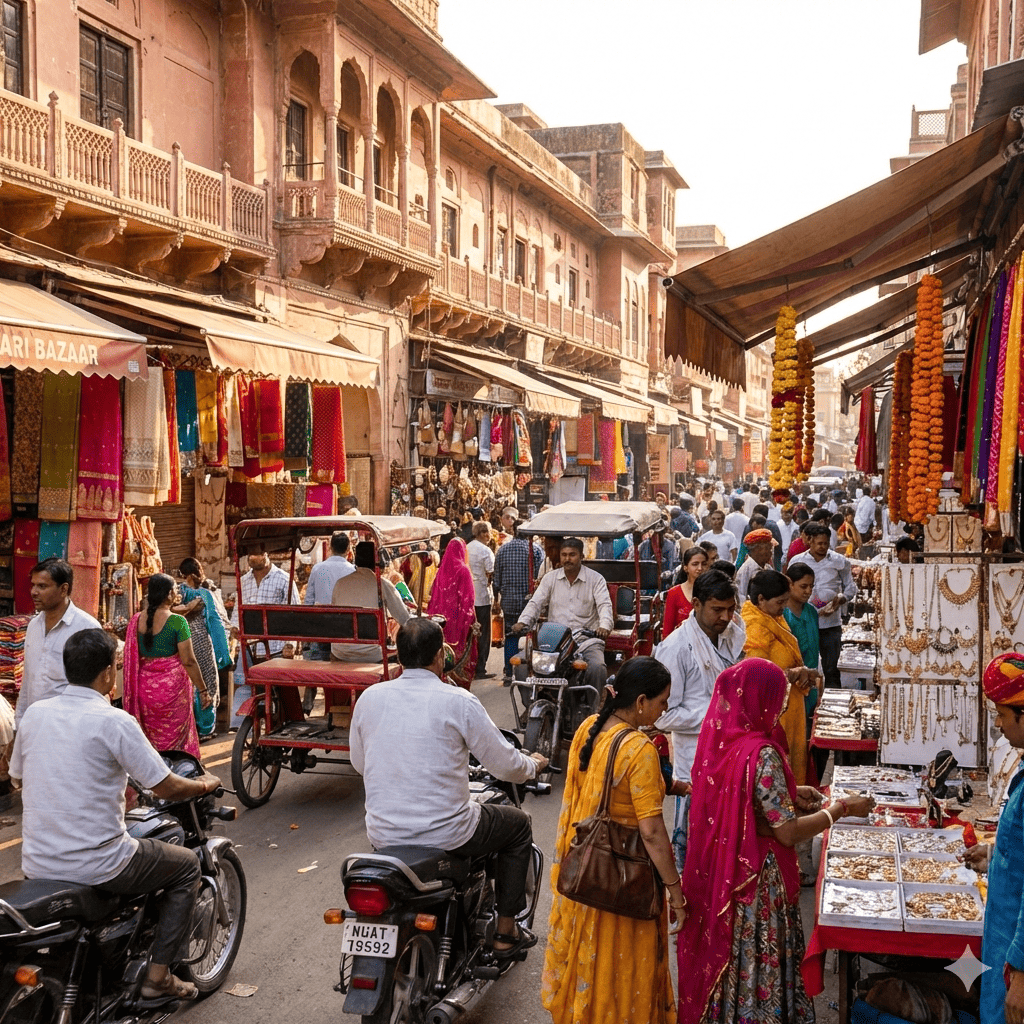
Jaipur's bustling markets are the soul of the Pink City, offering an authentic shopping experience that goes far beyond typical tourist purchases. From traditional Rajasthani handicrafts to semi-precious jewelry, the markets of Jaipur showcase the region's rich artisanal heritage. Whether you're looking for souvenirs or authentic pieces to take home, understanding Jaipur's shopping landscape will help you make the most of your visit.
Johari Bazaar: The Jewel in Jaipur's Crown
Johari Bazaar is Jaipur's most famous market, renowned for its exquisite jewelry, particularly semi-precious gemstones and kundan work. The name "Johari" literally means "jeweler," and this bazaar lives up to its reputation with hundreds of jewelry shops lining the narrow streets. The craftsmanship displayed here is extraordinary—artisans have perfected the art of gemstone cutting and setting over generations.
What makes Johari Bazaar special is the variety of jewelry styles available. You'll find everything from traditional Rajasthani pieces featuring kundan and meenakari to contemporary designs that appeal to modern tastes. The prices range from affordable to premium, catering to every budget. However, shopping here requires some haggling skills and knowledge about gemstones. Always check the authenticity certificates for precious stones, and don't hesitate to visit multiple shops to compare prices and quality.
The bazaar also offers traditional silver jewelry, particularly choker necklaces and intricate bangles that are perfect Instagram-worthy souvenirs. Early morning visits are recommended to avoid the afternoon rush and to experience the bazaar's authentic rhythm.
Bapu Bazaar: Fashion and Textiles Hub
Bapu Bazaar is Jaipur's answer to contemporary shopping, featuring clothing, textiles, and fashion accessories. This market is especially known for its traditional Rajasthani fabrics, including bandhani (tie-dye) and block-printed textiles that are exported worldwide. The craftsmanship in these textiles reflects centuries-old techniques passed down through generations of artisans.
You'll find an impressive array of kurtas, sarees, and traditional Rajasthani dresses that make excellent purchases or gifts. The fabrics are perfect for those interested in ethnic wear or authentic home décor items. Bapu Bazaar is also more organized than some other markets, with wider streets and clearer shop arrangements, making it easier to navigate.
The pricing is relatively fixed compared to other Jaipur markets, though some haggling is still possible for bulk purchases. This market is ideal for fashion enthusiasts looking for traditional Indian wear with a contemporary twist.
Rajasthani Handicrafts and Artisan Studios
Beyond the traditional bazaars, Jaipur is home to numerous artisan workshops and handicraft studios where you can witness the creation process firsthand. These spaces showcase various crafts including blue pottery, which is Jaipur's signature handicraft style. Blue pottery pieces—from decorative tiles to functional tableware—feature stunning floral patterns and geometric designs in deep blue and turquoise colors.
Visiting these studios offers an educational experience where you can interact with artisans, learn about their techniques, and purchase directly from creators. This approach ensures fair compensation for artisans and helps preserve traditional crafts. Many studios offer pieces of exceptional quality that you won't find in commercial markets.
Lacquerware and wooden boxes with intricate inlay work are other Jaipur specialties. The precision and patience required to create these pieces is remarkable. Chatri Bazaar specifically specializes in these wooden handicrafts and offers an interesting browsing experience.
Gems and Minerals: Semi-Precious Stone Market
Jaipur has earned a global reputation as a hub for semi-precious gemstones. Multiple markets and shops specialize in raw and polished stones, attracting jewelry designers and enthusiasts from around the world. Ajmeri Gate area houses several reputable gemstone dealers where you can purchase raw stones or finished pieces.
The varieties available include agate, turquoise, garnet, and carnelian, among many others. For those interested in crystal healing or gemstone jewelry, this market offers authentic options at reasonable prices. However, expertise in gemstone evaluation is crucial to ensure you're getting genuine products. If you're not knowledgeable, consider shopping from certified dealers or bringing along someone with gemstone expertise.
Nehru Bazaar: Everyday Shopping and Local Life
For an authentic glimpse into how locals shop, Nehru Bazaar is a must-visit. This market caters primarily to residents rather than tourists, offering everything from spices and dry fruits to cookware and household items. The atmosphere here is lively and chaotic in the best way possible—it's a genuine slice of Jaipur's everyday life.
While it may not seem like a typical tourist shopping destination, Nehru Bazaar is excellent for purchasing authentic Rajasthani spices, dry fruits, and edible souvenirs. Items like gur (jaggery), dried fruits, and traditional Rajasthani sweets make excellent gifts and are more meaningful than typical tourist merchandise.
Shopping Tips and Market Etiquette
When shopping in Jaipur's markets, keep several things in mind. First, bargaining is expected and encouraged in most bazaars—it's part of the shopping culture. However, be respectful and reasonable; aim for a 20-30% discount rather than unrealistic reductions. Second, always check authenticity certificates for precious items like gemstones and silver. Third, avoid shopping immediately upon arrival; take time to understand market prices before making major purchases.
Best shopping hours are 10 AM to 6 PM. Markets are usually closed on Sundays or certain days of the week—check before planning your visit. If you're carrying valuable purchases, use hotel safes for storage and carry photocopies of certificates.
Where to Shop: Street Markets vs. Malls
While traditional bazaars offer authenticity and better prices, modern shopping malls in Jaipur provide a comfortable, air-conditioned shopping environment with fixed prices and international brands. C-Scheme area has several malls, but they lack the charm and authenticity of traditional markets.
The choice depends on your preferences. If you want to experience authentic Jaipur and get traditional handicrafts, bazaars are the way to go. If you prefer convenience and brands, malls are suitable. Ideally, combine both experiences to get a complete Jaipur shopping perspective.
Photography Opportunities While Shopping
Jaipur's markets are incredibly photogenic, with colorful textiles, intricate handicrafts, and vibrant street life. If you enjoy photography, the bazaars offer countless subject matters. Visit Photography Spots for Instagram in Jaipur for more curated locations, but don't miss the candid moments while exploring markets—these often capture the authentic essence of Jaipur better than posed shots.
Shopping and Cultural Experiences
Shopping in Jaipur is more than transactions; it's a cultural experience. Engage with shop owners, ask about the creation process, and show genuine interest in the craft. Many shopkeepers are passionate about their work and enjoy sharing stories about their products. This interaction enriches your shopping experience and contributes to the local economy.
For a deeper understanding of Jaipur's cultural heritage reflected in its products, check out Cultural Experiences and Festivals in Jaipur.
Practical Planning for Market Visits
Allocate at least one full day for market exploration if you want to explore multiple bazaars thoroughly. Wear comfortable footwear, carry small change for easier transactions, and keep your valuables secure. Learn a few basic Hindi phrases—locals appreciate the effort, and it can help in negotiations.
Market visits are best done in groups or with local guides who can help navigate and recommend trustworthy shops. Many hotels arrange market tours; these can be worthwhile, though personal exploration often leads to better discoveries and deals.
Conclusion
Jaipur's markets are living showcases of Rajasthan's artistic heritage and commercial vibrancy. Whether you're seeking traditional handicrafts, jewelry, or textiles, the bazaars offer authenticity, variety, and value that modern malls cannot replicate. The experience of navigating these bustling markets, interacting with local artisans, and discovering unique treasures makes shopping in Jaipur an integral part of any city visit.
Remember, the best souvenirs from Jaipur are those that carry stories—pieces made by artisans whose techniques have been perfected over centuries. By shopping thoughtfully and supporting local craftspeople, you're not just acquiring products; you're preserving cultural heritage.